Stones Beneath Our Feet: The Quiet Splendour of Britain's Native Gemstones
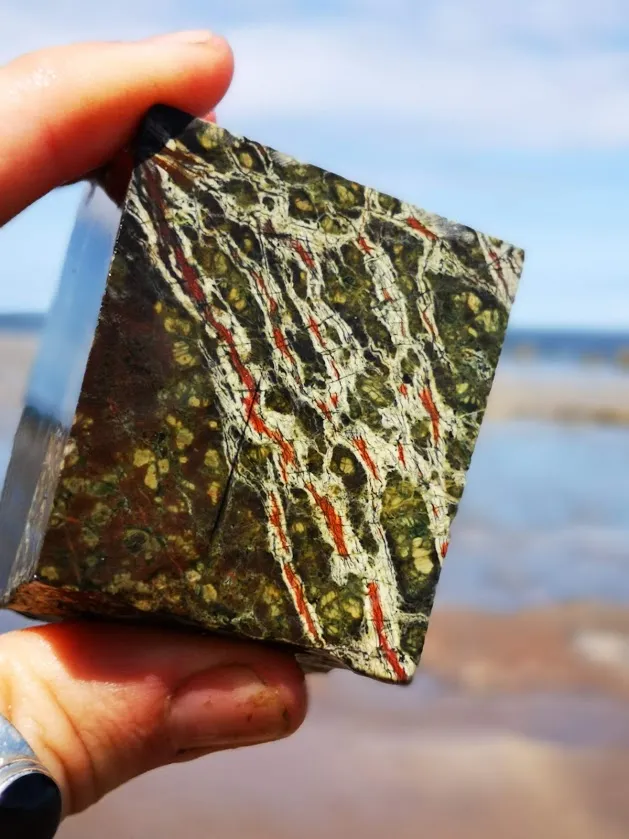
Photo: British gemstones serpentine cairngorm Whitby jet jewellery UK landscape, via eborjetworks.co.uk
It is easy to assume that the world's finest gemstones originate exclusively in far-flung corners of the globe — the sapphire mines of Sri Lanka, the emerald fields of Colombia, the diamond pipes of southern Africa. Yet beneath the heather-clad moorlands, along the wave-battered coastlines, and deep within the ancient geology of these islands, Britain conceals its own extraordinary treasury of precious and semi-precious materials. For jewellery designers willing to look closer to home, and for buyers who prize authentic provenance above all else, the rewards are considerable.
The history of British gemstone mining is long, romantic, and largely forgotten. It is a history worth recovering.
Cornwall: Where the Earth Yields Its Secrets
No discussion of British gemstones can begin anywhere other than Cornwall. This southwesternmost county, shaped by millennia of volcanic and tectonic activity, has been yielding extraordinary minerals for centuries. The Romans prized Cornish tin; later generations mined copper, arsenic, and a remarkable range of semi-precious stones that continue to surface along its dramatic coastlines today.
Serpentine — a mottled green stone with an almost waxy lustre — is perhaps Cornwall's most distinctive contribution to the jeweller's palette. Found primarily on the Lizard Peninsula, where it forms the very bedrock of the cliffs, serpentine has been carved and polished into ornamental objects since at least the eighteenth century. Its deep, variegated greens, occasionally streaked with red or white, lend it a character that no two pieces share. Contemporary designers working with Cornish serpentine are finding that its organic patterning suits the clean lines of modern jewellery with unexpected elegance.
Tourmaline, too, has been found in Cornish granite formations, alongside topaz and, occasionally, specimens of aquamarine. These discoveries are rarely on the scale of the great gem-producing regions of the world, but they carry something that imported stones cannot: a direct connection to British soil, to a specific landscape, and to a tradition of extraction that is inseparable from the county's cultural identity.
Jewellery designer Petra Nancarrow, who works from a studio near Falmouth, has built her practice around Cornish materials. "There is something almost sacred about working with stone that was formed here, on this peninsula, over millions of years," she reflects. "When I set a piece of Lizard serpentine in silver, I'm not just making a piece of jewellery. I'm making a record of place."
Scotland's Highland Treasures
Travel north, and Britain's geological character shifts dramatically. The Scottish Highlands — among the oldest landscapes in Europe — offer a different but equally compelling array of native materials. Cairngorm, a smoky variety of quartz named after the mountain range in which it is found, has been associated with Scottish jewellery for centuries. Victorian jewellers incorporated it extensively into the Highland brooches and dirk handles that became fashionable during the reign of Queen Victoria, whose profound attachment to Scotland did much to elevate the status of its native stones.
Today, cairngorm is experiencing something of a quiet renaissance. Designers working in Edinburgh and Inverness are incorporating it into contemporary settings that honour its history whilst speaking to a modern sensibility. Its warm, amber-brown tones — ranging from pale honey to deep cognac — pair beautifully with both yellow gold and oxidised silver, offering a versatility that more flamboyant stones cannot always match.
Scotland also yields amethyst of notable quality. Specimens have been found in Perthshire, and the stone's association with Scottish landscape and legend gives it a resonance that imported amethyst, however fine, cannot entirely replicate. Freshwater pearls, once harvested from Scottish rivers — particularly the River Tay and its tributaries — represent perhaps the most poignant chapter in British gemstone history. Now strictly protected under law, these lustrous pearls were once among the most prized in Europe, featuring in the jewels of Mary, Queen of Scots herself. Antique Scottish freshwater pearls, when they do appear in the hands of contemporary makers, are treated with the reverence they deserve.
Wales and the English Heartlands
Wales contributes its own distinctive materials to the British jeweller's repertoire. Welsh gold — extracted from the Dolgellau Gold Belt in Gwynedd — is among the most coveted precious metals in the world, its rarity lending it a value that far exceeds its weight alone. The tradition of using Welsh gold in royal wedding rings dates to 1923, when a nugget from the Clogau St David's mine was gifted to Lady Elizabeth Bowes-Lyon. Every subsequent royal wedding ring has incorporated Welsh gold, a tradition that continues to the present day and imbues the metal with an almost mythological status.
Beyond Wales, jet — a dense, black gemstone formed from fossilised wood — has been quarried near Whitby on the North Yorkshire coast for over four thousand years. Its association with Victorian mourning jewellery is well known, but contemporary designers are finding in it a material of striking modernity. Its deep, light-absorbing blackness, its surprising lightness, and its capacity to take a high polish make it a compelling choice for bold, architectural pieces.
Contemporary Designers Reimagining British Heritage
What distinguishes the current generation of British jewellers working with native materials is not merely their use of local stones, but the conceptual seriousness with which they approach the task. These are not designers producing novelty souvenirs; they are artists engaged in a genuine dialogue with landscape, history, and material culture.
Jonathan Hale, a London-based designer who sources exclusively from British suppliers, describes his practice as an act of "geological storytelling." His current collection incorporates Cornish tourmaline, Scottish cairngorm, and Whitby jet within minimal, architecturally influenced settings that allow the stones to speak for themselves. "The material comes with a narrative already embedded in it," he explains. "My job is simply to create the conditions in which that narrative can be heard."
This approach resonates strongly with buyers who have grown weary of jewellery that carries no story beyond its price tag. For them, a piece incorporating a stone sourced from a specific British location — with a documented provenance and a connection to a named maker — represents something qualitatively different from even the most technically accomplished imported piece.
Investing in Provenance
For the discerning buyer, British gemstones offer something that the global market cannot easily commodify: authentic local provenance. A ring set with a stone from the Lizard Peninsula, a bracelet incorporating Welsh gold, a pendant featuring a polished specimen of Scottish cairngorm — each of these carries within it a fragment of these islands' extraordinary natural and cultural history.
This is jewellery as a form of stewardship. By choosing pieces made from British materials, by supporting the independent designers and specialist suppliers who sustain this tradition, buyers become participants in a story that stretches back through centuries of craft and landscape. At Sanctuary Jewellery, we believe that the finest adornment is always, at its heart, a kind of homecoming — a return to what is genuine, what is enduring, and what is irreplaceably our own.