A Generation Redefining Luxury: How Younger Buyers Are Turning to Handcrafted Jewellery
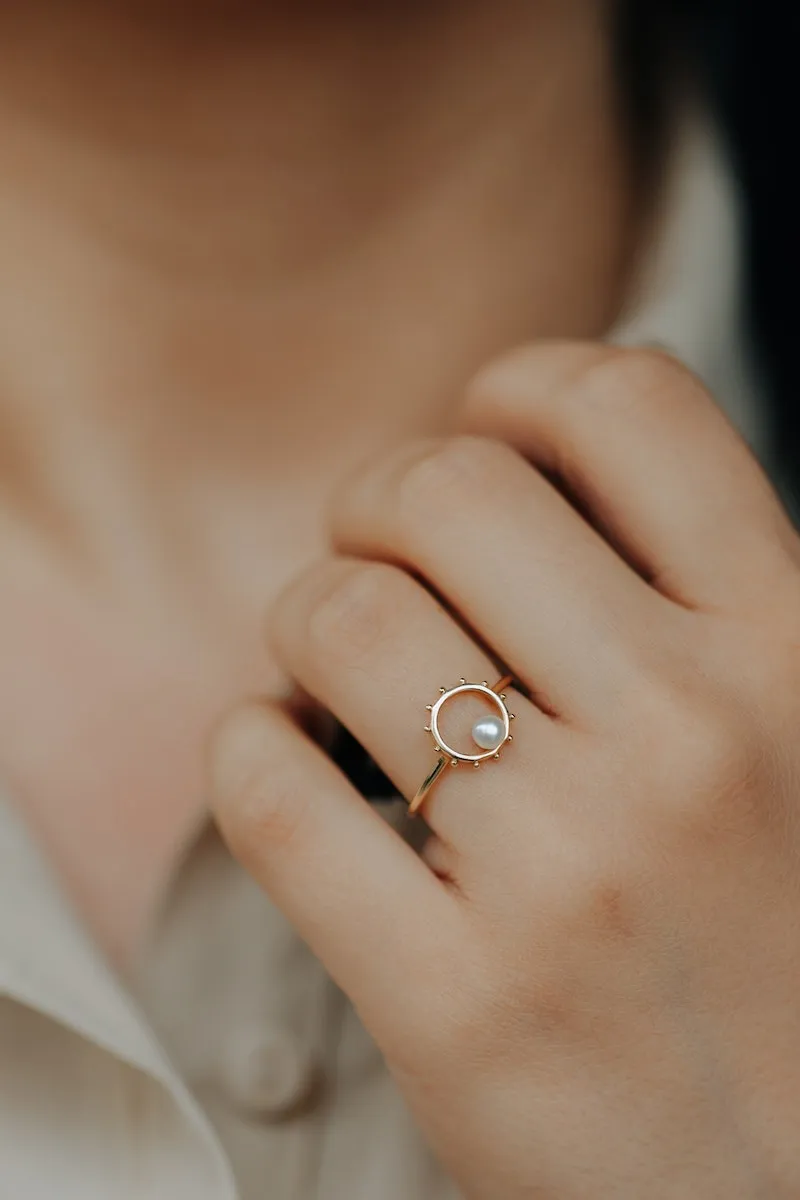
Photo: young woman wearing handcrafted artisan jewellery ethical sustainable gold ring close up, via faircado.com
For much of the past two decades, the prevailing narrative around younger consumers and luxury goods was one of inaccessibility and aspiration — a generation priced out of heritage brands, making do with high-street imitations and trend-driven costume pieces. That narrative is now being quietly but decisively dismantled.
Across Britain, a growing cohort of millennial and Gen Z buyers are not simply aspiring to traditional luxury; they are redefining what luxury means to them entirely. And at the centre of this redefinition sits the handcrafted jewellery piece — considered, traceable, and freighted with meaning in ways that a mass-produced chain or a fast-fashion ring simply cannot replicate.
The Rejection of Disposability
To understand this shift, it helps to understand what younger buyers are moving away from. The past decade saw the explosive growth of fast-fashion jewellery: algorithmically designed pieces, manufactured at scale in conditions of frequently questionable labour practice, sold at low price points and designed — implicitly or explicitly — to be discarded within a season.
For many younger consumers, the experience of purchasing such pieces has become actively uncomfortable. Awareness of environmental impact, supply chain opacity, and the psychological hollowness of trend-driven consumption has fostered a growing appetite for its opposite: the piece that is made by hand, made to last, and made with a transparent understanding of where its materials originated.
"I became really conscious that I had a drawer full of jewellery I didn't care about," explains Priya, a 28-year-old graphic designer based in Manchester. "None of it meant anything. I decided I'd rather save up for one piece that I actually understood — where it came from, who made it — than keep buying things that would turn my skin green."
This sentiment recurs with striking consistency among younger UK buyers. It is less a critique of luxury per se than a critique of the simulation of luxury — of objects that perform value without embodying it.
Provenance as the New Premium
If previous generations understood luxury primarily through the lens of brand prestige, younger buyers are increasingly drawn to a different kind of premium: provenance. The ability to trace a piece back through its supply chain — to know that the gold was responsibly sourced, that the gemstones were ethically mined, that the maker was fairly compensated for their skill and time — has become, for this cohort, a prerequisite rather than an added virtue.
This is not merely idealism. It reflects a sophisticated understanding of what value actually means. A handcrafted ring made by a Hatton Garden jeweller using Fairmined gold and a traceable sapphire is not simply more ethical than its mass-produced counterpart; it is, by any meaningful measure, more genuinely luxurious. It represents the concentration of human skill, time, and material integrity in a form that will not degrade, discolour, or disappoint.
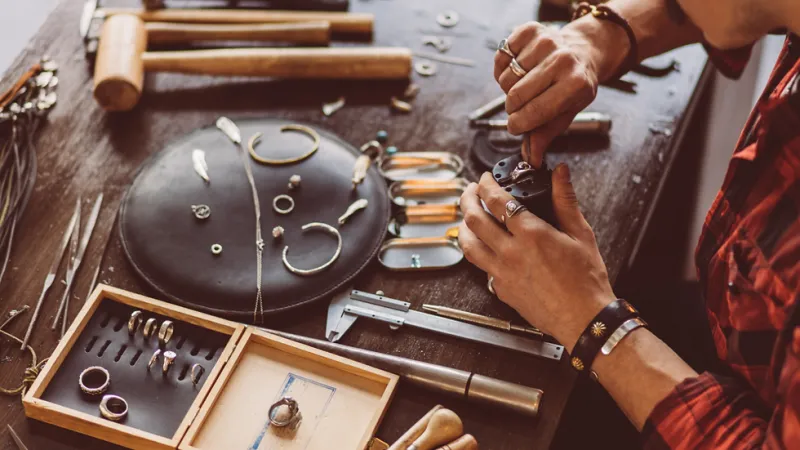
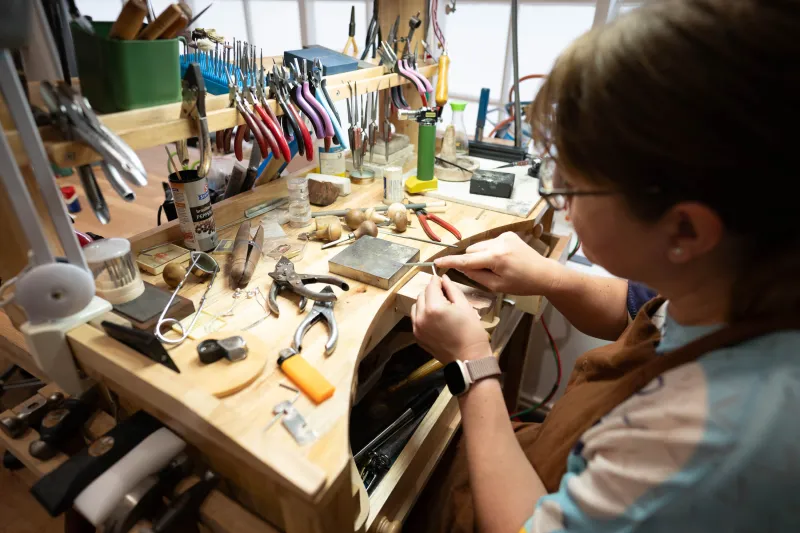
Jamie Whitmore, an independent jewellery maker based in Bristol whose work has attracted a predominantly under-35 clientele, has observed this shift first-hand. "The questions my customers ask have completely changed over the last five years," he notes. "It used to be almost entirely about aesthetics — does it look right? Now I'm routinely asked about my suppliers, my process, how long a piece takes to make. They want to understand what they're investing in. That's a profound shift."
The Inheritance Imperative
There is another dimension to this cultural turn that deserves particular attention: the question of inheritance. Younger buyers are thinking, perhaps surprisingly, in generational terms.
The fast-fashion jewellery of the past decade was, by design, non-heritable — not built to survive a single owner, let alone to pass through hands across generations. Handcrafted pieces, by contrast, are made with precisely this durability in mind. And for a generation that has grown up watching the environmental consequences of a throwaway economy, the idea of purchasing an object that might one day be passed to a child or grandchild carries a particular moral weight.
"I think about the jewellery my grandmother left me," says Caitlin, a 31-year-old teacher from Edinburgh. "Every piece has a story. I want to be able to do the same for whoever comes after me. That's not something you can do with a £12 necklace from a fast-fashion website."
This inheritance imperative is reshaping how younger buyers conceptualise the value of what they purchase. A handcrafted piece is not merely an adornment for today; it is a future heirloom in the making — an object that will accumulate meaning across time rather than depreciate into irrelevance.
Sustainability and the Luxury Paradox
The relationship between sustainability and luxury has long been fraught with tension. Traditional luxury was, by definition, resource-intensive — a celebration of abundance and excess. The emerging model of values-driven luxury among younger buyers represents something genuinely new: an understanding of sustainability not as a constraint upon luxury but as its very foundation.
This perspective is gaining traction beyond the consumer base. Sustainability experts and industry analysts alike have noted that the brands best positioned for long-term relevance are those that can demonstrate genuine ethical commitment, not merely token gestures. For independent jewellery makers and small-scale artisanal studios, this represents a significant opportunity — and one that many are embracing with considerable creativity.
The Responsible Jewellery Council's growing membership among independent British makers reflects this trend, as does the increasing prominence of Fairmined and Fairtrade gold certifications in the marketing of smaller jewellery businesses. These are not niche concerns; they are becoming baseline expectations among a generation of buyers who research their purchases with considerable rigour.
What This Means for the Market
The implications for the broader jewellery market are substantial. The mass-market model — high volume, low margin, rapid trend cycles — is facing genuine structural pressure as younger buyers allocate their discretionary spending differently. Meanwhile, the market for handcrafted, ethically produced pieces is expanding in ways that were difficult to predict even a decade ago.
For established luxury houses, the challenge is one of authentic adaptation — demonstrating that commitments to craft and sustainability are embedded in practice rather than marketing. For independent makers, the opportunity is perhaps more straightforward: to continue doing what they have always done, and to communicate it with greater clarity and confidence to an audience that is actively seeking them out.
A New Kind of Sanctuary
At its deepest level, what younger buyers appear to be seeking in handcrafted jewellery is something that transcends fashion: a form of material culture that is genuinely trustworthy. In a commercial landscape saturated with greenwashing, algorithmic manipulation, and the relentless churn of trend cycles, a piece of jewellery that is honestly made, honestly sourced, and built to last represents a kind of sanctuary in itself.
That is, perhaps, the most compelling story of this generational shift. It is not simply about aesthetics, or sustainability, or even inheritance — though it encompasses all of these. It is about the profound human desire for objects that mean what they appear to mean; that reward sustained attention; that are, in the fullest sense of the word, worthy of being kept.
In choosing handcrafted over mass-produced, this generation is not retreating from the modern world. They are asking, with admirable clarity, that the objects they carry through it be equal to the weight of that responsibility.