The Grounding Touch: How Handcrafted Jewellery Is Becoming a Tool for Mental Wellbeing
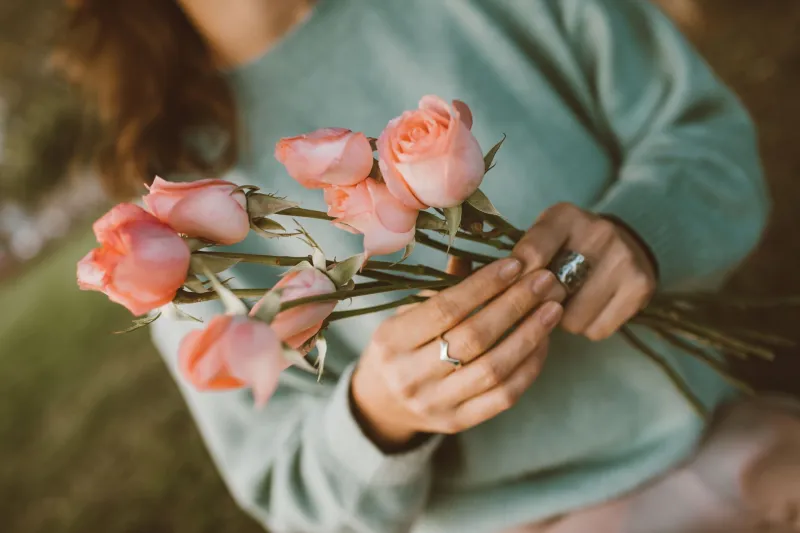
There is a particular kind of comfort that arrives not through words, but through the hands. The instinct to reach for something solid — to press a thumb against a familiar surface, to feel the reassuring weight of metal against skin — is as old as human consciousness itself. In an era defined by digital abstraction and relentless stimulation, it is perhaps unsurprising that a growing number of people in Britain are rediscovering this instinct through the jewellery they wear.
What was once considered purely decorative is being reconsidered with fresh eyes. Psychologists, occupational therapists, and jewellers alike are beginning to speak the same language: that of objects imbued with meaning, worn close to the body, capable of offering genuine psychological refuge during moments of distress, transition, or overwhelm.
The Body Knows Before the Mind Does
Dr Harriet Lowell, a cognitive behavioural therapist practising in Edinburgh, has observed a recurring pattern among her clients. "Many people describe reaching for a particular piece of jewellery during moments of heightened anxiety," she explains. "Whether they are aware of it or not, they are engaging in a form of sensory grounding — using the physical world to interrupt the cycle of anxious thought."
This phenomenon aligns with established therapeutic frameworks. Grounding techniques, widely used in trauma-informed care and mindfulness practice, encourage individuals to anchor themselves in the present moment through sensory experience. The five senses become lifelines. Touch, in particular, carries extraordinary potency — it is processed rapidly by the nervous system and has been shown to reduce cortisol levels when associated with comfort and safety.
Jewellery, worn habitually and charged with personal significance, occupies a uniquely privileged position in this regard. Unlike a pebble carried in a pocket or a rubber band worn on a wrist, a piece of handcrafted jewellery carries layers of meaning: the memory of who gave it, the occasion that prompted its purchase, the craft of the hands that made it. These associations do not merely accompany the object — they intensify its grounding power.
Intentional Design: Pieces Made to Be Touched
Not all jewellery is created with this purpose in mind. Mass-produced pieces, uniform in their finish and anonymous in their origins, offer little of the tactile variation that makes an object genuinely compelling to the fingers. Handcrafted jewellery is different. The slight irregularities of hand-hammered metal, the organic contours of a stone set by a craftsperson rather than a machine, the warmth of a surface worn smooth by years of contact — these qualities invite touch in a way that factory-finished pieces rarely do.
Several independent British jewellers have begun designing pieces with intentional mindfulness in mind. Bristol-based maker Seren Aldous describes her process as beginning with the hand rather than the eye. "I think about what it feels like to hold a piece before I think about how it looks," she says. "There is a particular satisfaction in a surface that responds to touch — a texture that rewards the thumb, a weight that feels deliberate rather than incidental."
Her collection includes a series of sterling silver rings with subtly ridged interiors, designed to be rotated quietly during moments of stress. The gesture is imperceptible to others, but for the wearer, it provides a reliable and private anchor — a small ceremony of return to the present moment.
This approach echoes centuries of precedent. Worry beads, prayer rings, and tactile devotional objects have existed across cultures and faiths for millennia, each premised on the same fundamental insight: that the body can steady the mind when the mind cannot steady itself.
The Role of Provenance in Psychological Resonance
It is not only the physical qualities of a piece that determine its capacity to ground. Provenance — the story of where an object came from, how it was made, and by whose hands — contributes profoundly to its psychological weight.
When a wearer knows that their bracelet was forged by a craftsperson in a small workshop in the Yorkshire Dales, that the silver was responsibly sourced and the stone chosen for its particular character, something shifts in the relationship between person and object. The piece becomes a node in a wider network of meaning — connected to a place, a tradition, a human being who cared enough to make it well.
This sense of connection is itself therapeutic. Research in positive psychology consistently demonstrates that feelings of belonging and connection — even to objects and their makers — contribute to psychological resilience. A piece of jewellery with a known and valued provenance does not merely sit upon the wrist; it carries a world with it.
"People often tell me they feel calmer simply knowing where their piece came from," says London silversmith James Okoro, who documents his making process and shares it with every customer. "There is something settling about understanding the journey an object has taken. It makes it feel trustworthy — and trust, I think, is what we are really looking for when we reach for something in a difficult moment."
Wearing Wellbeing: A Considered Practice
The idea of jewellery as wearable self-care is not a trivial one, nor should it be reduced to the language of wellness marketing. What is being described here is something older and more serious: the human need for objects that matter, that endure, that connect us to ourselves and to others across time.
In Britain, where stoicism has long been worn as a cultural virtue, the permission to seek comfort in a physical object can feel quietly radical. Yet there is nothing sentimental about it. The instinct is rational, the evidence persuasive, and the tradition — stretching from medieval reliquary pendants to Georgian mourning rings — thoroughly respectable.
What handcrafted jewellery offers, at its finest, is precisely what its name suggests: a sanctuary. Not an escape from the difficulties of living, but a place of reliable return — a surface to press against, a weight to feel, a story to remember when the present moment feels unsteady.
Choosing With Intention
For those who wish to cultivate this kind of relationship with their jewellery, the process of selection matters enormously. A piece chosen hastily, without consideration of its tactile qualities, its provenance, or its personal resonance, is unlikely to serve as a grounding tool. The investment — of time, of attention, of care — is itself part of what makes the object meaningful.
Seek pieces with surfaces that reward exploration. Consider the weight, the temperature of the metal, the way a stone feels beneath a fingertip. Ask about the maker, the materials, the process. Allow yourself to be moved by a piece before you commit to it. The connection you feel in the choosing is the same connection you will return to in moments of need.
In this sense, selecting a piece of handcrafted jewellery is not so very different from any other considered act of self-care. It is a declaration that your inner life deserves objects equal to its complexity — objects made with skill, worn with intention, and capable of holding something of who you are.
That, in the end, is what a sanctuary is for.