What We Leave Behind: The Quiet Dialogue That Jewellery Carries Between Generations
There is a particular quality of silence that settles over a room when a piece of jewellery changes hands within a family. It is not an empty silence. It is weighted, full of things understood without being spoken — of lives lived, of choices made, of love expressed through objects rather than declarations. For many British families, a grandmother's sapphire ring or a grandfather's cufflinks represents not merely an heirloom but an ongoing conversation: one that began before the recipient was born and may continue long after they are gone.
This is the silent language of jewellery, and it is older, perhaps, than any written script.
A Form of Inheritance That Cannot Be Itemised
When we speak of inheritance, we tend to think in practical terms — property, savings, possessions of measurable worth. But those who work closely with families across generations of jewellery ownership understand that what passes between hands is rarely reducible to monetary value. The meaning encoded within a handcrafted piece is something altogether more intimate.
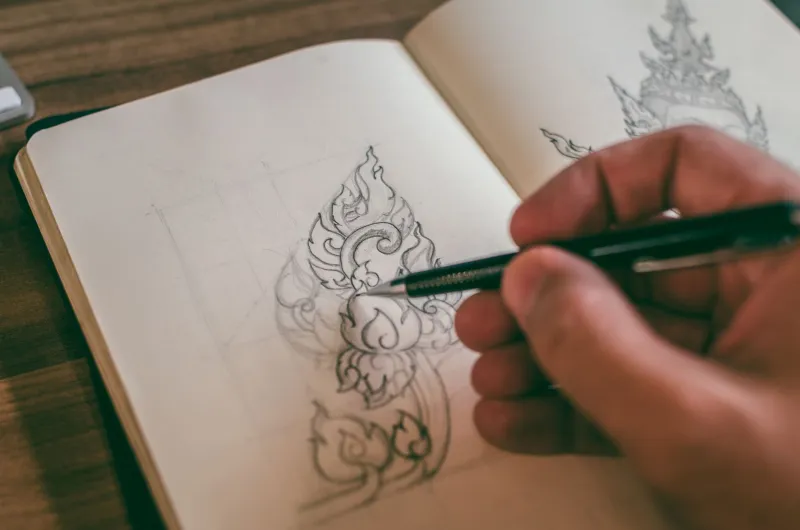
Consider the act of commission itself. A parent or grandparent who chooses to have a piece made — rather than purchased off the shelf — is already engaged in an act of deliberate transmission. They are selecting materials, forms, and motifs with a consciousness that extends beyond the present moment. The choice of a particular gemstone, a specific hallmark, an engraved date: each decision is a sentence in a letter that may not be read for decades.
British jewellers who specialise in pieces designed with longevity in mind speak of this intention with notable consistency. The most meaningful commissions, they observe, are those where clients arrive not simply with aesthetic preferences but with stories — stories they wish to preserve in metal and stone for those who will come after them.
The Grammar of Handcraft
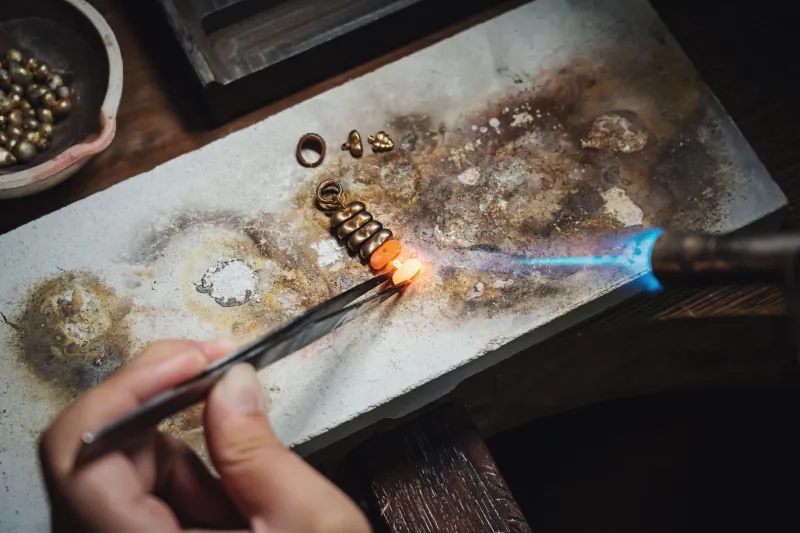
What distinguishes a handcrafted piece from its mass-produced counterpart is not merely the absence of machinery. It is the presence of decision — the countless micro-choices made by a skilled maker's hands that leave their trace in the finished object. A slight asymmetry in a hand-formed band, the particular way a setting holds its stone, the texture left by a specific tool: these are not imperfections. They are signatures.
For the next generation receiving such a piece, these details become points of connection. To hold a ring that a craftsperson shaped by hand is to hold something that resists the anonymity of industrial production. It insists upon its own particularity. And in doing so, it insists upon the particularity of the person who first wore it.
This is why the choice of handcraft matters so profoundly when jewellery is made with inheritance in mind. Machine-made pieces, however beautiful, carry no maker's presence. They offer no texture for memory to grip. Handcrafted jewellery, by contrast, gives future generations something to read — a physical record of care and intention that can be felt as much as seen.
Reading What Was Never Written
Families across Britain will recognise the experience of encountering an ancestor's jewellery and feeling, unexpectedly, that they understand something new about that person. A great-aunt's Art Deco brooch, with its geometric precision and restrained glamour, speaks of a sensibility — of a woman who valued order and elegance in a turbulent era. A Victorian mourning locket, containing a lock of hair, articulates a depth of grief that no surviving letter quite captures.
These pieces function as a form of autobiography written without words. They reveal what their wearers chose to carry close to their bodies, what they considered worthy of endurance, what they wished to mark as significant. For descendants, they offer a kind of intimacy with the past that photographs and documents rarely achieve — because jewellery, unlike a portrait, was touched. It was warm. It moved through the world on a living body.
This tactile dimension is central to jewellery's power as intergenerational language. When a daughter fastens her mother's necklace around her own throat, she is not simply wearing an object. She is completing a circuit of connection, joining herself physically to a lineage.
Designing for Dialogue
For those considering commissioning a piece with future generations in mind, the conversation with a jeweller becomes something more than a design brief. It becomes an act of considered authorship. Which materials will age gracefully and acquire beauty through wear rather than losing it? Which forms are timeless enough to remain meaningful across shifting fashions? What details — an engraving, a family stone, a motif drawn from shared history — will give a future wearer something to hold onto?
Experienced makers encourage clients to think beyond their own taste and into the sensibilities of those who might inherit. This requires a kind of imaginative generosity: the willingness to subordinate personal preference slightly in favour of something more enduring. A piece designed purely for the present moment may delight its first owner without speaking to anyone who comes after. A piece designed with dialogue in mind carries something forward.
The use of ethically sourced, traceable materials adds another layer to this dialogue. Knowing that a stone was responsibly mined, that a metal carries a clear chain of provenance, gives future generations not only a beautiful object but a record of values — a signal that the person who commissioned it cared about the world beyond their own lifetime.
When Objects Outlive Their Owners
There is something quietly extraordinary about the fact that a well-made piece of jewellery will almost certainly outlast its maker, its first wearer, and very possibly several generations beyond. Gold does not decay. Properly set stones endure. A hallmark pressed into metal in a British assay office two centuries ago remains as legible today as the day it was struck.
This durability is not incidental. It is part of what makes jewellery so potent as a medium of familial communication. Unlike a voice, unlike a face, unlike even a handwritten letter, a piece of jewellery can be worn again. It can re-enter the world, be seen, be touched, be carried into rooms its original wearer never imagined. In this way, the conversation it carries is not closed at death. It continues, finding new listeners, acquiring new resonances, accumulating new layers of meaning with each generation that holds it.
For those who seek sanctuary in beautiful, enduring things, this is perhaps the most profound gift that handcrafted jewellery offers: not merely something to wear, but something to say — across time, across silence, across the distance that separates one life from another.
The jewellery we commission today is already speaking to people who have not yet been born. The question worth asking is simply: what do we wish them to hear?