The Unworn and the Beloved: What Our Hidden Jewellery Reveals About Who We Are
The Drawer That Holds What We Cannot Say
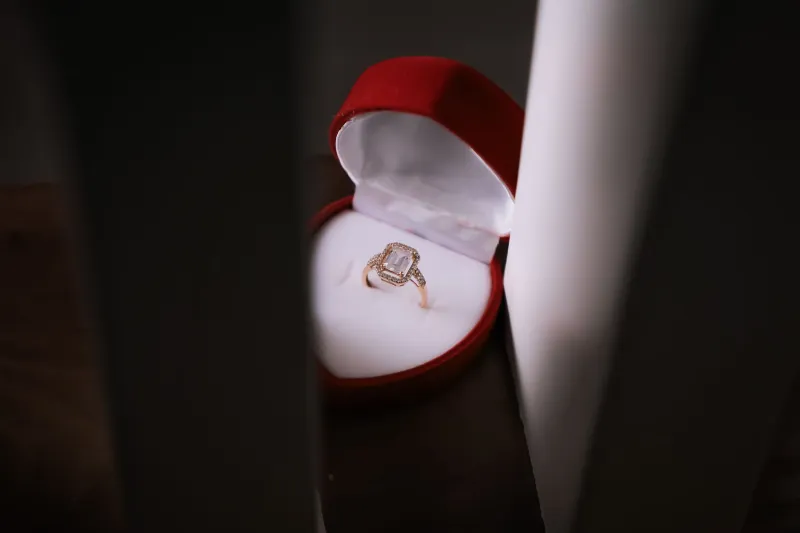
There is, in most homes, a place where certain things are kept that are neither used nor discarded. A velvet pouch at the back of a wardrobe. A lacquered box on a dressing table, its lid rarely lifted. A silk-lined drawer that opens only when the house is quiet. Inside, more often than not, lies jewellery — pieces that have not seen daylight in months or years, yet which their owner could not contemplate relinquishing.
This is not carelessness, nor is it mere sentiment. It is something more layered, more revealing, and — when examined with honesty — more instructive about the nature of our relationship with beautiful objects than almost anything else we might own.
The jewellery we wear daily tells one story. The jewellery we keep but never wear tells quite another.
Aspiration Crystallised in Metal and Stone
Psychologists who study the relationship between material culture and identity have long noted that we often acquire objects not for their immediate utility but for the identity they promise. A piece of jewellery purchased during a significant moment — a promotion, a milestone birthday, a visit to a city that felt transformative — carries within it the emotional charge of that occasion. To wear it, paradoxically, risks diminishing that charge. Kept safely away, it remains perpetually potent.
Consider the woman who bought a particular ring in a small jeweller's shop in Edinburgh, convinced that it perfectly expressed the person she was becoming. Years later, she has not worn it once. The ring has not failed her. Rather, it continues to serve a purpose that wearing it never could: it holds open a door to a version of herself that remains beautifully possible.
This is the sanctuary drawer in its purest form — a curated space not of neglect, but of quiet, private aspiration.
The Weight of Provenance
Inherited pieces occupy a particularly complex position within these hidden collections. A grandmother's brooch, a great-aunt's pearl drop earrings, a signet ring passed down through a father's line — such objects arrive already laden with meaning, and that meaning does not always align with the life of the person who receives them.
To wear an inherited piece is to enter into a relationship with someone else's story, and that is not always a comfortable proposition. Many people find themselves keeping such pieces with the deepest reverence whilst never once pinning them to a lapel or drawing them through an earlobe. The piece is honoured precisely by being preserved, rather than risked in the ordinary friction of daily life.
This impulse speaks to a profound respect for provenance — an understanding, perhaps unconscious, that certain objects carry histories too significant to be subordinated to outfit coordination. The sanctuary drawer, in this sense, functions as a private museum, where the curatorship is entirely personal and the admission is granted only to oneself.
When the Piece Outgrows the Moment
There is another category of unworn jewellery that deserves consideration: the piece acquired for a specific occasion that has since passed, or for a version of one's life that has quietly transformed. An engagement ring from a relationship that did not endure. A necklace bought to mark an anniversary that feels complicated in retrospect. A bracelet chosen to celebrate a chapter that has since closed.
These objects are rarely discarded because their value is not purely sentimental. They represent real expenditure, genuine craftsmanship, and in many cases, considerable beauty. And yet to wear them is to carry a narrative that no longer fits. They remain in the drawer not as relics of failure, but as evidence of a life that has continued to evolve.
Understanding this distinction — between objects that no longer fit the present self and objects that have never yet fitted any version of oneself — is crucial to making sense of what our hidden collections are actually telling us.
Reckoning With the Collection We Have Built
For those who collect jewellery with genuine discernment, the sanctuary drawer presents an opportunity rather than a source of quiet guilt. To open it with honesty — to examine each piece not with nostalgia or obligation but with genuine enquiry — is to undertake a kind of personal archaeology.
Some pieces will reveal themselves as candidates for transformation. British jewellers with expertise in remodelling and reworking are increasingly sought out by clients who wish to honour the material and provenance of an inherited or sentimental piece whilst bringing it into alignment with the person they are today. A Georgian paste brooch might yield the stones for a contemporary ring. A heavy Victorian locket might be remounted as something lighter and more wearable. The craft is in knowing what to preserve and what to release.
Other pieces, examined honestly, will declare themselves ready to find new custodians. Selling or gifting a jewellery piece is not an act of betrayal — it is an acknowledgement that beautiful objects deserve to be worn, and that the right wearer may not be you.
Towards a More Intentional Collection
The most meaningful jewellery collections are not necessarily the largest or the most financially significant. They are the ones built with genuine self-knowledge — where each piece has a clear relationship with the person who owns it, whether worn daily, kept for occasions, or cherished as a private inheritance.
Building such a collection requires a willingness to distinguish between what we are drawn to and what we will actually reach for. It demands that we separate the allure of an object from its true compatibility with the life we lead. And it invites us to be honest about the role that aspiration plays in our acquisitions — to recognise when we are buying for the person we are, and when we are buying for the person we imagine we might one day become.
The sanctuary drawer need not be a place of quiet accumulation and vague unease. Approached with clarity, it becomes something rather more interesting: a map of the self, drawn in gold and gemstone, waiting to be read.
At Sanctuary Jewellery, we believe that every piece deserves a considered place in its owner's life — whether worn close to the skin, kept as a treasured private inheritance, or thoughtfully reimagined for the years ahead. The relationship between a person and their jewellery is rarely simple, and it is never static. It is, like all the most enduring things, a conversation that continues to evolve.