Older Than New: A Buyer's Companion to Britain's Pre-Loved Jewellery
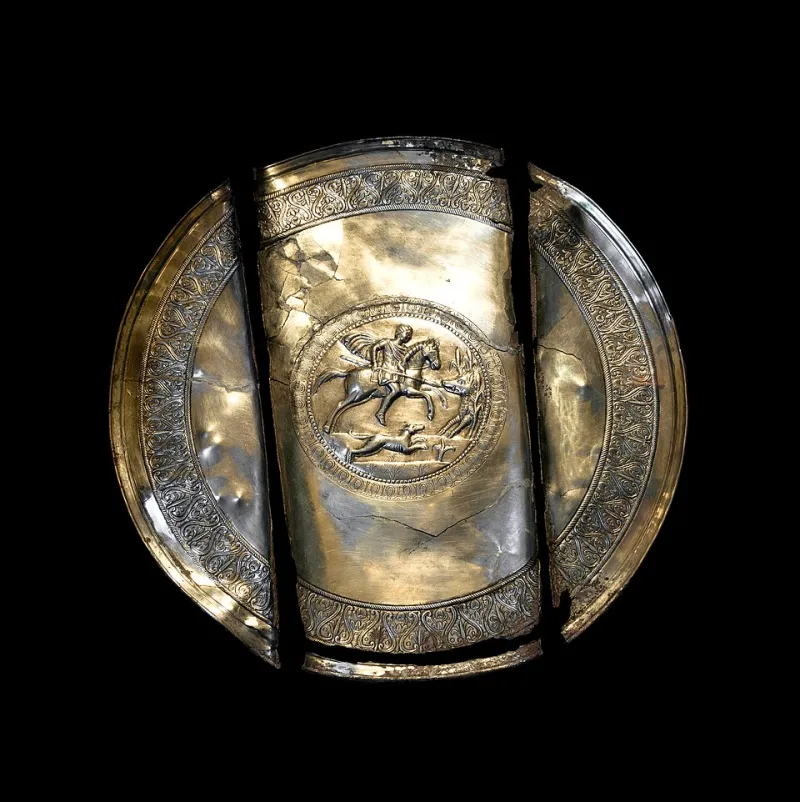
Photo: Jebulon, CC0, via Wikimedia Commons
There is a particular pleasure in buying a piece that already has a life. It is not the same pleasure as commissioning: there is no maker to consult, no drawing to approve, no wait. Instead there is a small act of detection — reading marks, weighing condition, asking the right questions — and then the odd, quietly moving experience of putting on something that has been worn before.
The British market is well suited to this. Auction houses, provincial dealers, fairs and a growing number of careful online sellers offer a depth of material that few countries can match. It is also a market with its own vocabulary and its own traps. What follows is a buyer's companion, not a guarantee.
First, Learn the Language of Hallmarks
In the United Kingdom, most precious metal pieces offered for sale must carry a hallmark. The conventional sequence is the sponsor's or maker's mark, the assay office mark, the date letter and the fineness mark, sometimes accompanied by a commemorative mark. The assay offices are London, Birmingham, Sheffield and Edinburgh; older pieces may carry marks from Chester, Glasgow, Dublin or other historic offices, and these are properly the subject of specialist reference rather than guesswork.
Fineness marks are worth committing to memory. Sterling silver is 925, Britannia silver 958. Gold is marked 375 for 9 carat, 585 for 14 carat, 750 for 18 carat and 916 for 22 carat. Platinum is commonly 950. Imported pieces should carry an import mark.
Two cautions. First, date letters are specific to each assay office and run in cycles; a letter alone proves little without knowing which office struck it. Second, hallmarks wear. A rubbed mark is not evidence of fraud, and a crisp mark on a piece purporting to be two centuries old deserves a question rather than a celebration.
Read the Wear, Not Just the Date
Genuine age leaves a signature that is difficult to fake convincingly. Look at where a piece has been touched: the base of a ring's shank, the outer edge of a bangle, the high points of a brooch. Look at solder joints, which should be neat and slightly duller than the surrounding metal. Look at the reverse of settings, which are often cruder than the front and reveal the maker's working method.
Be sceptical of perfection. A piece said to be Victorian and showing no wear at all is either exceptionally rare or not what it claims.
Six Checks Before You Commit
- Claws and settings. Ask for a close inspection of every claw tip. Worn claws are common and repairable, but they are a negotiating point, not a trifle.
- Shank condition. A ring worn thin at the base will need a re-shank. That is straightforward work, but it changes the piece and should be priced in.
- Hinges, clasps and catches. These are the most frequent failures in older jewellery. A loose box clasp or a tired hinge can be repaired, but test every moving part.
- Stones. Ask whether stones have been tested, not merely described. Paste, doublets and later replacements are common in genuinely old pieces and should be disclosed.
- Enamel and pearls. Enamel chips and pearl nacre are difficult and expensive to restore. Check both under good light and ask about prior restoration.
- Articulation. Bracelets and necklaces with many joints should move freely without stiffness or excessive play. A seized joint is an omen.
Questions Worth Asking About Provenance
Provenance is not the same as paperwork, though paperwork helps. Ask how the seller acquired the piece, whether it has been altered, and whether any original box, receipt or valuation survives. A family history is pleasant but unverifiable; a documented auction record is more useful. Reputable dealers in the United Kingdom will generally be willing to put condition and attribution in writing — and a refusal to do so is itself information.
At auction, read the condition report carefully and remember that the buyer's premium and VAT are added to the hammer price. On a piece bought at a provincial sale, that can add a third again to the cost.
Repair: Expectations and Honesty
Almost every old piece needs something. Re-tipping claws, re-shanking a ring, restringing pearls, replacing a worn catch: these are routine and should not deter a buyer. What matters is proportion. A restoration that preserves the piece is good conservation; a restoration that erases its history is a different act altogether.
Ask who will do the work and whether they have experience with period pieces. Sizing is not always simple — patterned, enamelled or engraved bands may not take a resize cleanly. Rhodium plating, popular on modern white gold, is often inappropriate on older pieces. Patina, that soft darkening in the recesses, is usually better left alone.
Telling Age from Pastiche
Pastiche is not the same as forgery. Much Victorian-style jewellery was made in the twentieth century, and honestly sold as such. The problem arises when style is mistaken for period. Georgian pieces are rarely marked; many so-called Georgian rings are later copies. Cut-down pieces — larger items remade into brooches or rings — are common and perfectly legitimate if disclosed, but they complicate any claim about date.
If a piece looks too clean, too regular, or too exactly like its period, ask for the basis of the attribution. A good seller will have one.
The Ethics and the Feeling
Buying pre-loved is, in a modest way, an ethical act. No new metal is mined, no new stones are extracted, and the craft embedded in the piece is preserved rather than replaced. It also supports a repair economy of small workshops and specialist benches that might otherwise disappear.
And there is the feeling, harder to justify and no less real. A piece that has been worn before carries a continuity that new work cannot manufacture. You are not the first to wear it, and with care you will not be the last. That is a strange and rather lovely thing to own — and, for many buyers, the whole point.