The Studio as Sanctuary: Inside the Creative Havens of Britain's Independent Jewellers
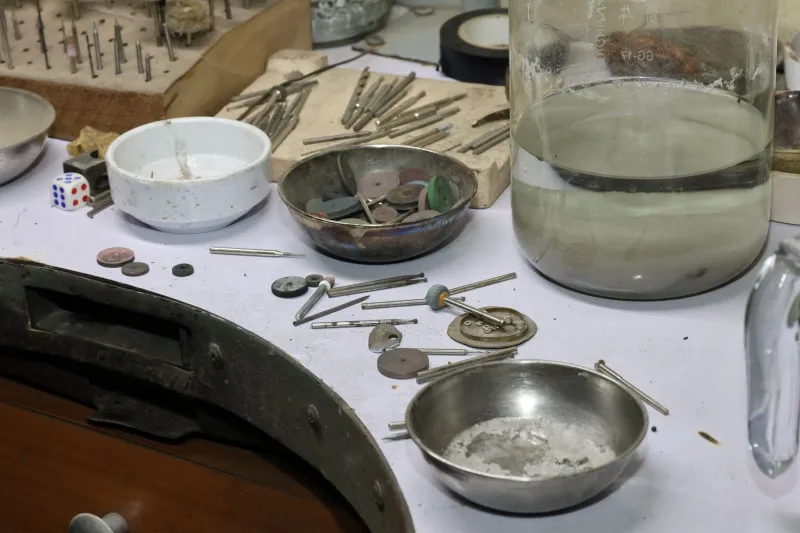
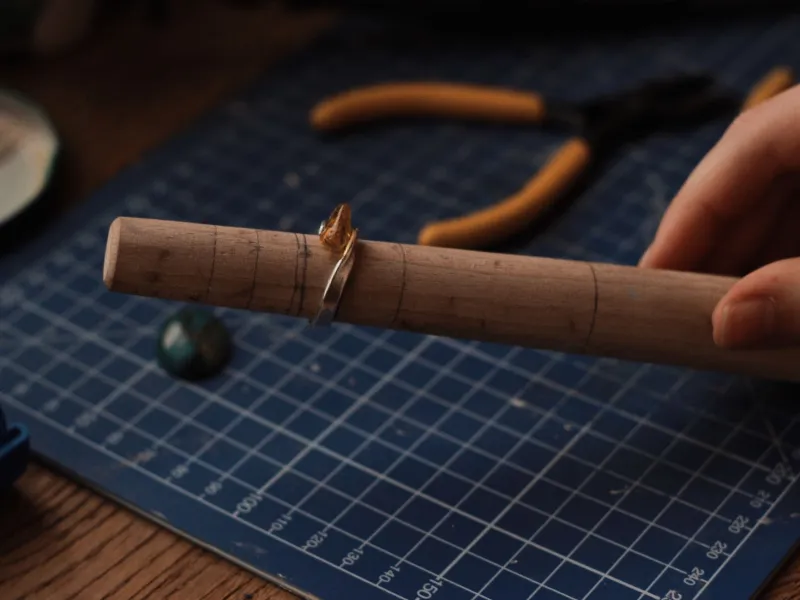
There is a particular kind of stillness that settles over a jeweller's studio in the early morning. Before the heat of the torch is lit, before the first sheet of metal is touched, there is a moment of pure possibility — the bench cleared, the tools arranged, the day unbegun. For many of Britain's independent jewellers, this moment is not incidental to their craft. It is, in fact, the very foundation of it.
In an age when speed and volume define so much of commercial life, a growing number of artisan jewellers across the United Kingdom are speaking openly about something that might once have seemed too personal for professional conversation: the role their studios play as places of genuine sanctuary. Not merely workshops, but havens — spaces shaped with as much care as the pieces produced within them.
A Space Apart
For Eleanor Marsh, a silversmith working from a converted barn studio in the Cotswolds, the relationship between environment and output is inseparable. "I spent years in a busy shared workshop," she explains, "and the work I produced reflected that energy — it was competent, but it was never quiet. When I moved into my own space and took time to make it feel intentional, something shifted in the pieces themselves."
This idea of intentionality — of creating a workspace that mirrors the values one wishes to embed in the work — appears repeatedly in conversations with British makers. It is not merely a matter of aesthetics, though many studios are strikingly beautiful in their simplicity. It is, more fundamentally, a philosophical stance: a belief that the conditions under which something is made leave an invisible but indelible impression upon the finished object.
For jewellers who work with precious metals and stones, this philosophy carries particular weight. A ring, after all, will be worn against the skin for decades. A pendant will rest close to the heart. The intimacy of the medium demands, many makers argue, an intimacy of process — and that begins long before the first mark is made.
The Client's Experience of the Maker's World
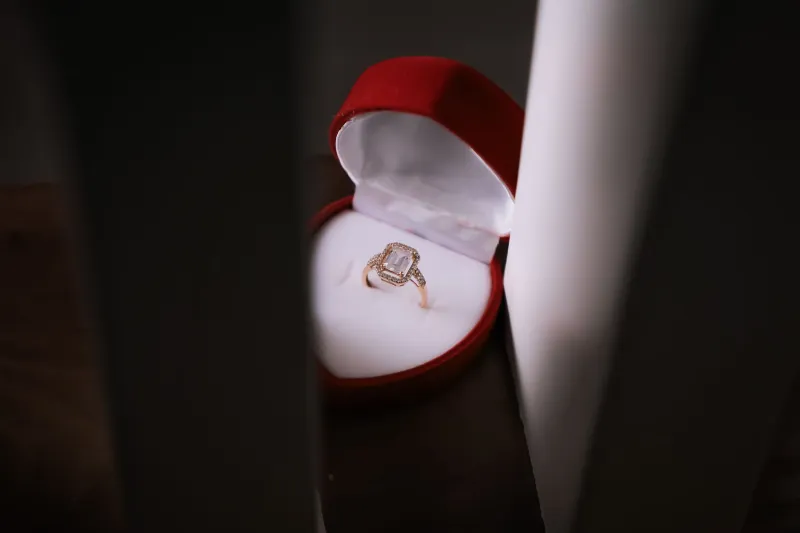
What is perhaps less often considered is the way in which a jeweller's personal sanctuary extends outward to shape the experience of those who commission from them. When a client visits a studio to discuss a bespoke piece, they are not simply entering a place of business. They are being invited into a world that has been carefully tended.
Sophie Alderton, who operates from a light-filled studio in Edinburgh's New Town, describes the consultation process as inseparable from the atmosphere she has cultivated. "People come to me at significant moments in their lives — an engagement, a bereavement, a milestone birthday. They are often carrying something quite tender. I think the studio needs to hold that. It needs to feel like a place where it is safe to be honest about what you actually want and what something actually means to you."
This attentiveness to the emotional register of the consultation is not universal, but it is characteristic of a particular strain of British jewellery-making that values depth over throughput. These makers are not working to catalogue deadlines or seasonal collections. They are working to a different rhythm entirely — one governed by the pace of their craft and the needs of the individual before them.
Craft as a Form of Quiet Resistance
There is, in the deliberate slowness of studio-based jewellery making, something that reads as quietly countercultural. In a broader economy that rewards acceleration, the jeweller who takes three months over a single commission is making a statement — not a loud or polemical one, but a statement nonetheless.
For James Whitfield, a goldsmith based in Bristol who trained under a master craftsman in Birmingham's historic Jewellery Quarter, the relationship between pace and quality is non-negotiable. "The Jewellery Quarter has this incredible heritage of precision and patience," he reflects. "That tradition taught me that rushing is not neutral — it costs something. Not just in the finish of the piece, but in the meaning of it. When I take my time, I am not being inefficient. I am being honest."
This honesty — to the material, to the process, to the client — is something that the best independent British jewellers wear as a kind of quiet badge. It manifests in the refusal to overcommit, in the care taken over sourcing, and in the willingness to turn down commissions that do not align with the maker's vision or values. The studio, in this sense, becomes a protected space not only in the physical sense but in an ethical one.
When the Maker's Refuge Becomes the Wearer's Talisman
There is a compelling argument — one that several makers articulate with considerable conviction — that the peace embedded in a piece of jewellery during its creation does not simply evaporate once the work leaves the studio. Whether one subscribes to the more metaphysical dimensions of this idea or not, there is something undeniably coherent about the logic: that an object made with care, in a place of calm, by hands that were fully present, carries within it a different quality of attention than one produced under pressure.
It is, in essence, the difference between mass production and genuine making. And it is precisely this distinction that draws a certain kind of client to seek out independent British jewellers rather than reaching for the familiar comfort of a high street brand.
For the wearer who understands this — who chooses a piece knowing something of the conditions of its creation — the jewellery becomes more than an accessory. It becomes a small, portable sanctuary: a reminder, worn close to the body, that somewhere, in a quiet studio in Edinburgh or the Cotswolds or Bristol, someone took the time to do something properly.
The Continuity of Care
What emerges from these conversations is not a romantic fantasy of solitary genius, but something more grounded and more interesting: a picture of makers who have thought carefully about the relationship between environment, process, and meaning, and who have structured their professional lives accordingly.
Britain has a long and distinguished tradition of craft excellence — from the hallmarking institutions of Assay Offices that have guaranteed quality for centuries, to the regional traditions of silversmithing and goldsmithing that persist in cities such as Birmingham, Sheffield, and London. What today's independent jewellers are doing is not departing from this tradition, but deepening it — adding to technical mastery a layer of intentional practice that speaks directly to the needs of a contemporary clientele.
For those who seek jewellery that carries genuine meaning — pieces that are not merely worn but truly held — the studio is where the story begins. And in the hands of Britain's most thoughtful makers, it is a story told with extraordinary care.