Worn Comfort: The Psychology of Jewellery as Personal Refuge
The Object That Holds You
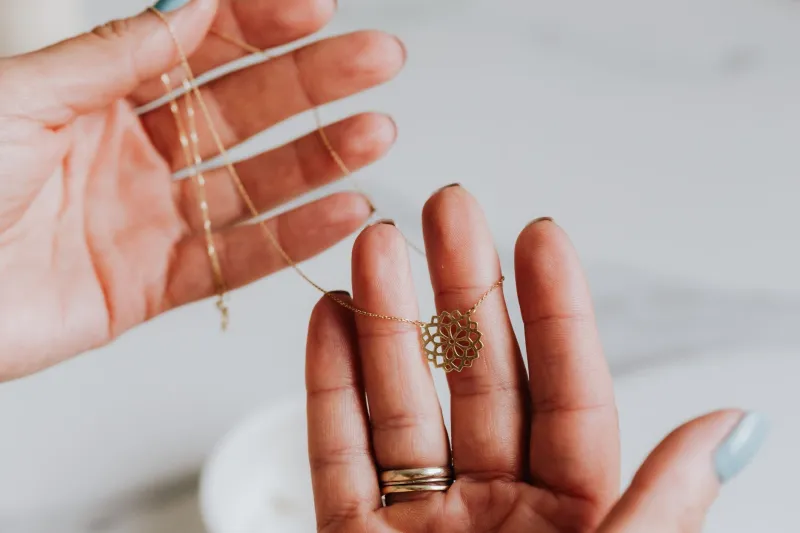
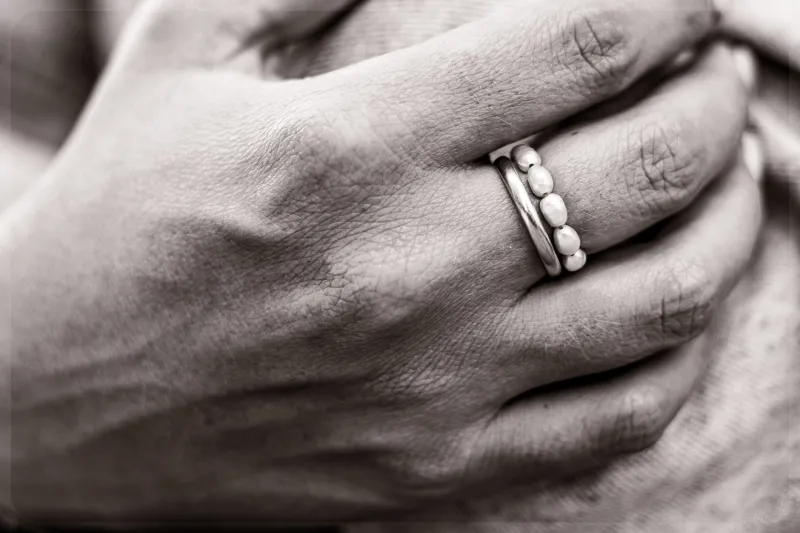
There is a gesture most of us recognise, even if we have never named it. A hand moves to a necklace during a difficult conversation. Fingers rotate a ring beneath a conference table. A thumb traces the engraved surface of a bracelet inherited from someone no longer living. These are not nervous habits so much as deliberate, if unconscious, acts of self-regulation—a reaching inward through something worn outward.
The idea that objects carry emotional weight is hardly new. Archaeologists have uncovered amulets and talismans from virtually every ancient civilisation, suggesting that the human impulse to find comfort in a physical token predates recorded history. What is perhaps more surprising is how persistently this impulse endures. In an age of digital distraction and therapeutic apps, many people still find their most reliable source of grounding in something they can hold in their palm or wear against their skin.
Handcrafted jewellery, in particular, seems especially well-suited to this role—and understanding why reveals something profound about the relationship between material culture and inner life.
Why Handcrafted Pieces Carry a Different Weight
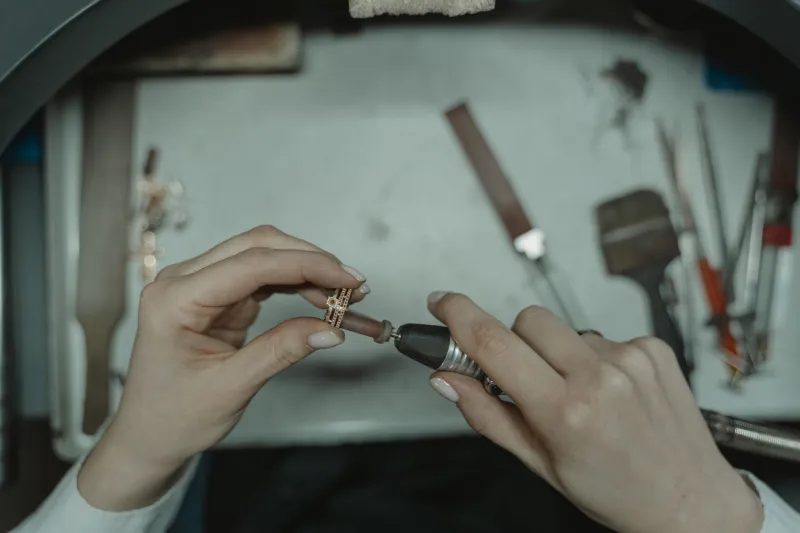
Mass-produced jewellery, however attractive, arrives in the world without a particular story. It has been pressed, cast, and packaged by machinery calibrated for efficiency rather than intention. Handcrafted pieces, by contrast, bear the invisible signature of another human being: the slight asymmetry of a hammered surface, the deliberate choice of a stone, the hours of considered effort that shaped raw metal into something singular.
For the wearer, this distinction matters more than it might initially appear. Psychologists who study object attachment have long noted that we form stronger emotional bonds with items we believe to be unique or personally meaningful. When a piece of jewellery has been made by hand—and especially when it has been made specifically for us, or chosen with deliberate care—it enters our lives already imbued with a kind of intentionality that resonates on a deeper level than aesthetic pleasure alone.
Dr. Helena Marsh, a clinical psychologist practising in Edinburgh who has written on the therapeutic dimensions of material objects, describes this as a form of "externalised self-coherence." In her words: "We sometimes need our sense of self to exist somewhere outside our own minds—somewhere we can touch and verify. A piece of jewellery that carries genuine meaning can serve precisely that function. It tells us who we are when we are struggling to feel it from the inside."
The Language of Touch
There is also a straightforwardly physical dimension to the comfort jewellery provides. The act of touching a familiar object—one whose weight, texture, and temperature have been learned by the body over time—activates the somatosensory cortex and can measurably reduce cortisol levels, the hormone most closely associated with stress. This is the same mechanism that makes a worry stone effective, or that explains why adults as well as children often find comfort in holding something familiar during periods of anxiety.
Handcrafted jewellery, with its varied surfaces and tactile richness, is particularly responsive to this kind of engagement. A piece with a hammered finish, a carved stone, or a deliberately textured band invites touch in a way that a smooth, uniform surface does not. For many wearers, the ritual of reaching for a specific piece each morning—selecting it, fastening it, feeling its familiar settle against the skin—functions as a grounding practice in its own right, a small ceremony of self-collection before the day begins.
Amelia Forsythe, a silversmith based in the Cotswolds whose work is sought by clients across Britain, speaks of designing with this in mind. "I think about how a piece will feel as much as how it will look," she explains. "There's a woman who has worn the same ring of mine for eleven years. She told me she puts it on before anything difficult—job interviews, hospital appointments, difficult conversations. It's become part of how she prepares herself. That means more to me than any award."
Provenance as Emotional Architecture
The history embedded within a piece of jewellery—whether it is the maker's biography, the origin of its materials, or the story of how it came to be chosen—forms what might be called its emotional architecture. This is the invisible framework upon which comfort is built.
A ring fashioned from gold mined responsibly in Wales and shaped by a craftsperson who has spent twenty years perfecting their technique carries within it a lineage of human effort and care. When that ring is worn, its wearer does not carry it alone. There is a sense, however metaphorical, of being accompanied—of the object's own history lending a kind of ballast to the present moment.
This is particularly true of inherited pieces, where the provenance is intimate and familial. But it can also hold for newly commissioned work, especially when the maker and wearer have collaborated closely. The knowledge that someone gave genuine thought to your particular brief—that they selected a stone for its colour, chose a setting for its resonance with something you love, worked through multiple iterations to arrive at something that feels right—transforms the resulting object from a purchase into a relationship.
Finding Sanctuary in the Everyday
The word "sanctuary" carries ecclesiastical weight—it suggests a space set apart, protected, deliberately removed from the ordinary world. Yet the most enduring sanctuaries are often the most portable: a habit of mind, a memory, an object small enough to wear on one's finger.
In this sense, jewellery has always been one of humanity's most intimate technologies of refuge. It travels with us. It survives transitions—moves, losses, the passage of decades. It asks nothing of us except to be worn, and in being worn, it offers something back: continuity, identity, the quiet reassurance of beauty that endures.
For those who feel the pull of handcrafted pieces, this is rarely a conscious calculation. It is more often a recognition—the feeling, upon encountering a particular ring or pendant, that it already belongs to some essential part of oneself. That feeling deserves to be taken seriously. It is not mere sentiment. It is the deep human intelligence that has always known where to find shelter.
At Sanctuary Jewellery, we believe that the finest pieces are those which offer more than elegance. They offer a place to return to—worn on the body, carried in the spirit, and valued not simply for what they look like, but for what they quietly do.